

Picture buying a new phone and putting it through its paces - calling someone, sending a message, snapping a photo. You’re checking whether it behaves the way you expect, without caring how its internals make that happen. That’s black box testing: judging the software purely by what it does, not how it’s built.
What is Black Box Testing?
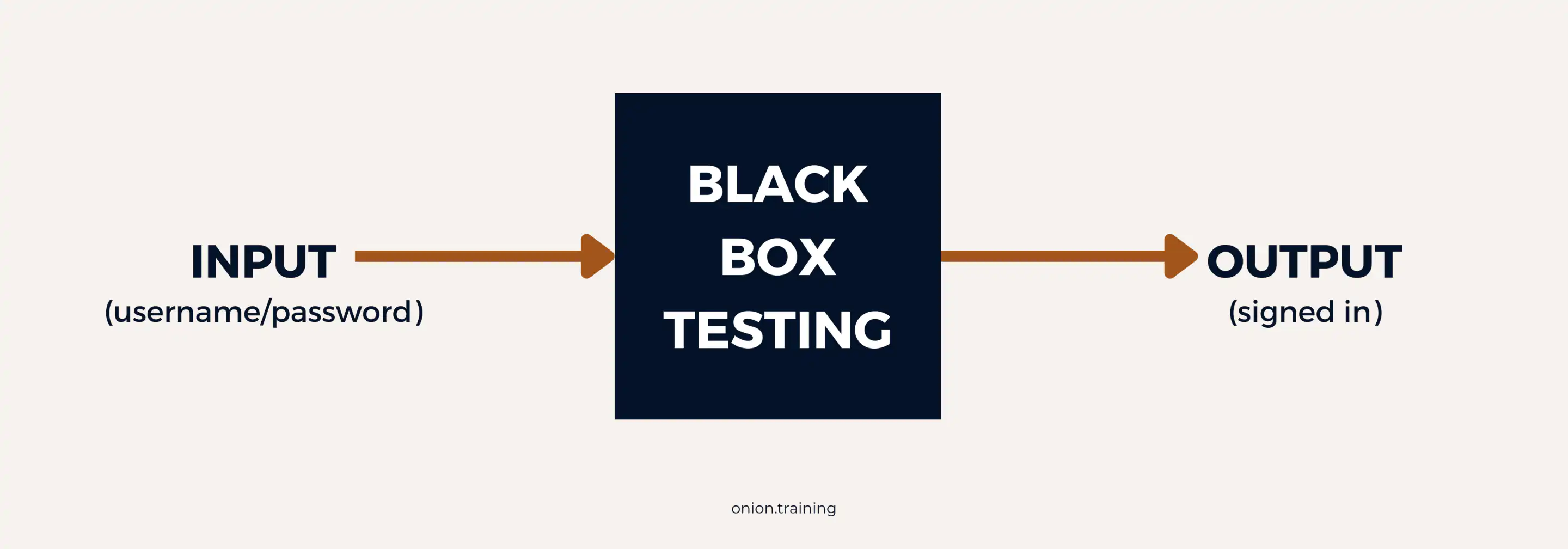
What is black box testing? Black box testing evaluates software functionality without looking inside the system. Testers interact with the application through its UI (user interface) or APIs exactly as an end user would. The internal logic stays hidden - hence the term “black box.”
As a tester, your job is to verify that the system behaves according to its requirements: if the input is correct, the expected output appears; if something goes wrong, the application responds appropriately. The focus remains entirely on external visible behaviour.
Core Characteristics of Black Box Testing
What is black box testing built upon? There are several key characteristics that define this testing approach and distinguish it from other methods.
- Requirements-based testing forms the foundation, where testers design test cases based on software requirements and specifications. Testers examine what the system promises to do and build tests around those expectations, without referencing the underlying code.
- Independent testing is performed by people who weren’t involved in the development work. This separation helps uncover issues developers may overlook and reduces bias.
- Functional testing drives the main goal. To verify that each feature behaves correctly for valid and invalid inputs. Whether it’s a login screen, a checkout process, or an API endpoint, the question remains: does it fulfil its defined purpose?
Types of Black Box Testing
What is black box testing composed of?
Multiple testing types fall under this umbrella, each targeting different aspects of quality.
Functional Testing
This validates that every feature behaves as intended and aligns with the requirements. A shopping cart should add items, calculate totals and handle checkout - functional testing confirms all of that.
Depending on context, this can include smoke testing, integration testing, or full system testing.
Non-Functional Testing
This focuses on attributes like performance, usability, scalability and security. It evaluates how well the system operates under different conditions.
- Performance testing checks response times and throughput.
- Usability testing examines how easily users can accomplish tasks
- Security testing identifies vulnerabilities
Regression Testing
Regression testing checks that any changes, such as new features, patches or bug fixes, don’t break existing functionality. If something worked in version 1.0, it should still work in version 1.1.
Black Box Testing Techniques
What is black box testing's methodical approach to black box testing?
There are several proven techniques that guide testers in creating effective test cases that maximise coverage whilst minimising needless tests.
Equivalence Partitioning
Here, inputs get grouped into classes where elements behave the same. Testing one value from each class provides coverage without testing every possible value.
Example: An age field that only accepts 18–65 forms three partitions:
- one below (17)
- one within (30)
- one above (66)
A few representative values cover the whole space.
Boundary Value Analysis
Defects often occur at the edges of valid ranges. BVA focuses on testing those limits (and sometimes a mid-range value).
For a ticket system allowing 1–20 tickets, the relevant values are 0, 1, 20 and 21.
Decision Table Testing
Complex business rules benefit from mapping combinations of conditions and expected actions. Decision tables ensure all combinations and outcomes are accounted for.
State Transition Testing
State transition testing examines behaviour as the system moves between states.
For example, a login screen may lock an account on the sixth failed attempt - the transition between “active” and “locked” states is what gets tested.
Error Guessing
Experienced testers anticipate common mistakes and target those areas deliberately, such as:
- unhandled nulls
- input sanitation gaps
- incorrect data types
Comparing Testing Approaches
What is black box testing's relationship with other testing methods?
Understanding the differences helps teams select the most suitable techniques for various situations.
Black Box vs White Box Testing
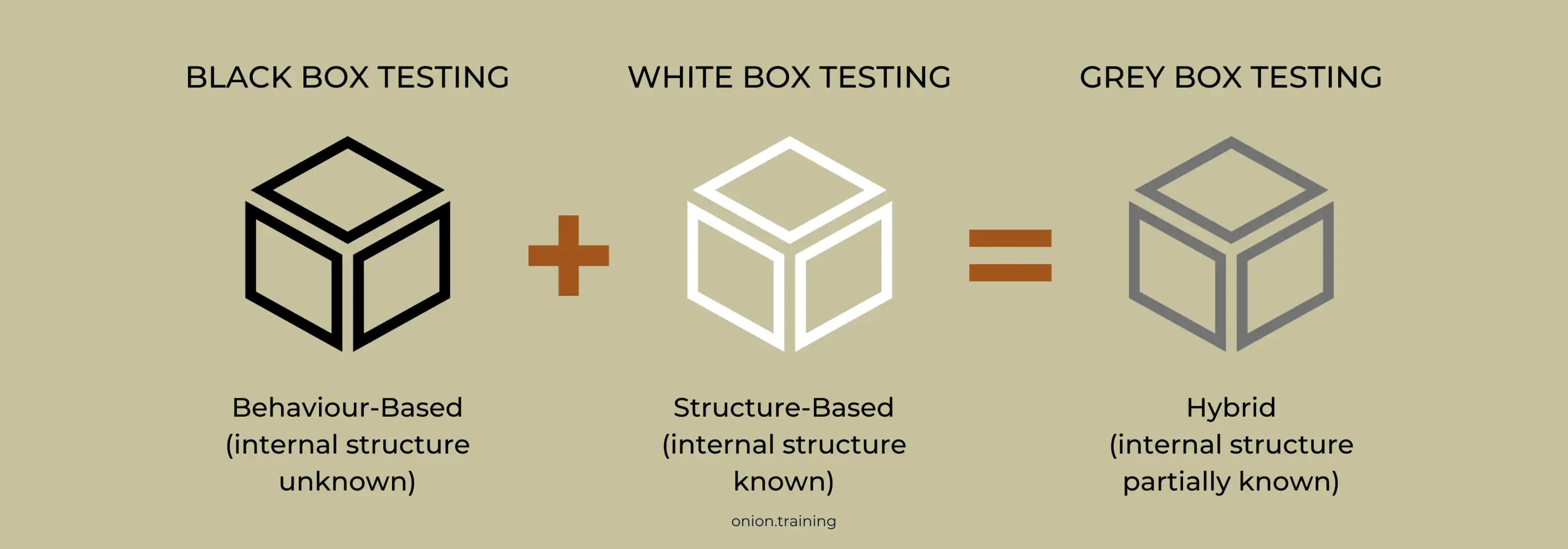
Black box testing focuses on what the software does.
White box testing focuses on how it works internally.
These two testing approaches complement each other: black box testing covers externally visible behaviour, while white box testing validates internal logic, paths and structures.
Grey Box Testing
Grey box testing uses partial internal knowledge to design more informed test cases, especially useful for integration testing, end-to-end flows and security assessments. It blends the strengths of both approaches.
Benefits of Black Box Testing
Black box testing offers several strong advantages:
- It requires no programming skills. It opens up testing to business analysts, domain specialists and end users.
- It’s cost-effective to set up, often needing only basic tools.
- It produces fewer false positives because results are compared directly against documented expected behaviour.
- It helps protect intellectual property by not exposing internal code.
- It supports large systems well because tests can be reused and repeated easily.
Challenges and Limitations
What is black box testing unable to achieve?
Black box testing isn’t universal:
- Exhaustive testing is impossible due to the huge number of possible input combinations and states.
- Poorly written or unclear requirements weaken test quality.
- Failures don’t reveal root causes; additional investigation is always needed.
- Some parts of the application may go untested if test cases don’t cover them.
Implementing Black Box Testing
What is black box testing's practical execution process?
The process typically follows a structured flow:
- Study the requirements and specifications - these define expected behaviour and act as the foundation for all tests.
- Design test cases using techniques like equivalence partitioning and BVA.
- Prioritise based on risk and importance.
- Execute tests, document actual behaviour and report discrepancies as defects.
Tools for Black Box Testing
Different tools support functional, performance and security testing:
- QTP, Selenium - automation for functional and regression testing
- LoadRunner, JMeter - performance and load testing
- DAST tools - automated security tests against running applications
Best Practices for Effective Testing
What is black box testing's path to success?
Following proven practices maximises the effectiveness and delivers reliable results.
- Start with complete, unambiguous requirements
- Apply structured techniques systematically
- Prioritise test coverage using risk-based criteria
- Automate repetitive tests where they add value
- Keep test cases and results well-documented
- Work collaboratively with developers to clarify issues and verify fixes
Key Takeaways - What is Black Box Testing?
- Black box testing evaluates functionality without internal code access.
- It’s accessible to non-programmers and relies on user-focused requirements.
- Key techniques include equivalence partitioning, BVA, decision tables and state transitions.
- It covers functional, non-functional and regression tests.
- Works best alongside white box and grey box approaches.
- Benefits include lower costs, high accuracy, IP protection and broad accessibility.
- Limitations include incomplete coverage and limited insight into root causes.
- Common tools include Selenium, QTP, JMeter, LoadRunner, and DAST tools.
- Research supports its effectiveness across domains.
- Success depends on clear requirements, structured techniques, risk-based focus, automation and good collaboration.
Frequently Asked Questions - What is Black Box Testing?
Q1: What is black box testing, and how does it differ from white box testing?
Black box testing checks if an application behaves correctly from the outside, based on requirements. White box testing examines the internal code, logic and structure. One validates behaviour; the other validates implementation. Both together give full coverage.
Q2: Which testing techniques are most effective for black box testing?
Equivalence partitioning, boundary value analysis, decision tables, state transitions and error guessing all apply - the right choice depends on the system’s complexity and input structure.
Q3: Do I need programming skills to perform black box testing?
No. Black box testing relies on understanding expected behaviour, not internal code. Technical awareness helps, but coding skills aren’t required.
This makes testing accessible to all team members without development backgrounds, including business analysts, domain experts, quality assurance specialists and end users. However, some technical understanding of system architecture and testing principles improves effectiveness. Many testers pursue testing certification to build this foundational knowledge without needing programming expertise.
Q4: What tools should I use for black box testing?
Selenium or QTP for functional testing; JMeter or LoadRunner for performance; DAST tools for security; BrowserStack for mobile environments.
Q5: How do I create effective black box test cases?
Start by thoroughly understanding requirements and specifications. Choose systematic techniques, define expected results, prioritise based on risk, include positive and negative cases, and review test cases with stakeholders.
Q6: Can black box testing achieve complete test coverage?
No. The goal is representative coverage, not exhaustive coverage. Combine it with white box testing for broader assurance.
Q7: When should I use black box testing versus white box testing?
Use black box testing to confirm user-visible behaviour and white box testing to validate internal logic. Most projects need both.
Q8: What are common mistakes to avoid in black box testing?
Testing without requirements, choosing inputs at random, ignoring negative tests, weak documentation, equal testing effort on everything, isolating testing from development and avoiding useful automation.
Q9: How does black box testing fit into Agile and DevOps?
Black box testing integrates well with Agile and DevOps practices through automation and continuous testing. Automated black box tests run with every code commit, providing rapid feedback on functionality. User stories and acceptance criteria serve as specifications for test case creation. Testers collaborate with developers throughout sprints rather than in separate phases. Regression test suites ensure new features don't break existing functionality.
Q10: What industries benefit most from black box testing?
Any industry that relies on reliable, user-facing systems - finance, healthcare, e-commerce, government, manufacturing, logistics - all gain from black box testing’s focus on expected behaviour and user experience.
Related articles
Why Patch Management Isn’t Just a Testing Issue