
The Payment Card Industry Data Security Standard (PCI DSS) is a set of security standards designed to ensure that all companies handling credit card transactions maintain a secure environment to protect cardholder data from breaches and fraud.
Key Aspects of PCI DSS
Purpose:
- Protect credit and debit card transactions from fraud, hacking and data theft.
- Ensure businesses securely process, store and transmit cardholder information.
Who Must Comply?
- Any business that processes, stores, or transmits payment card data (e.g., retailers, e-commerce stores, service providers).
- Applies to companies of all sizes handling card transactions.
Core Security Requirements (12 PCI DSS Requirements):
PCI DSS consists of 12 security requirements grouped into six control objectives:
A. Build and Maintain a Secure Network and Systems
- Install and maintain a firewall configuration to protect cardholder data.
- Do not use vendor-supplied defaults for system passwords and security settings.
B. Protect Cardholder Data
- Protect stored cardholder data.
- Encrypt transmission of cardholder data across open, public networks.
C. Maintain a Vulnerability Management Program
- Use and regularly update antivirus software or programs.
- Develop and maintain secure systems and applications.
D. Implement Strong Access Control Measures
- Restrict access to cardholder data to only those who need it.
- Identify and authenticate access to system components.
- Restrict physical access to cardholder data.
E. Regularly Monitor and Test Networks
- Track and monitor all access to network resources and cardholder data.
- Regularly test security systems and processes.
F. Maintain an Information Security Policy
- Maintain a policy that addresses information security for all personnel.
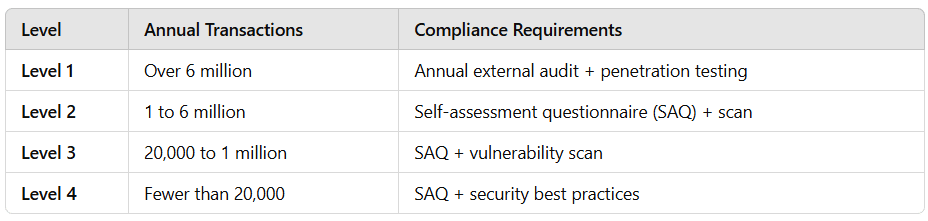
PCI DSS Compliance Levels:
PCI DSS has four compliance levels based on the number of card transactions a business processes annually:
Benefits of PCI DSS Compliance:
- Reduces the risk of data breaches and financial fraud.
- Enhances customer trust by ensuring secure transactions.
- Helps businesses avoid penalties and legal consequences.
- Ensures compliance with global payment security standards.
Consequences of Non-Compliance:
- Fines & Penalties: Payment brands (Visa, MasterCard, etc.) may impose hefty fines.
- Data Breaches: Higher risk of hacking, leading to financial and reputational loss.
- Legal Liability: Possible lawsuits or regulatory actions for failing to protect consumer data.